

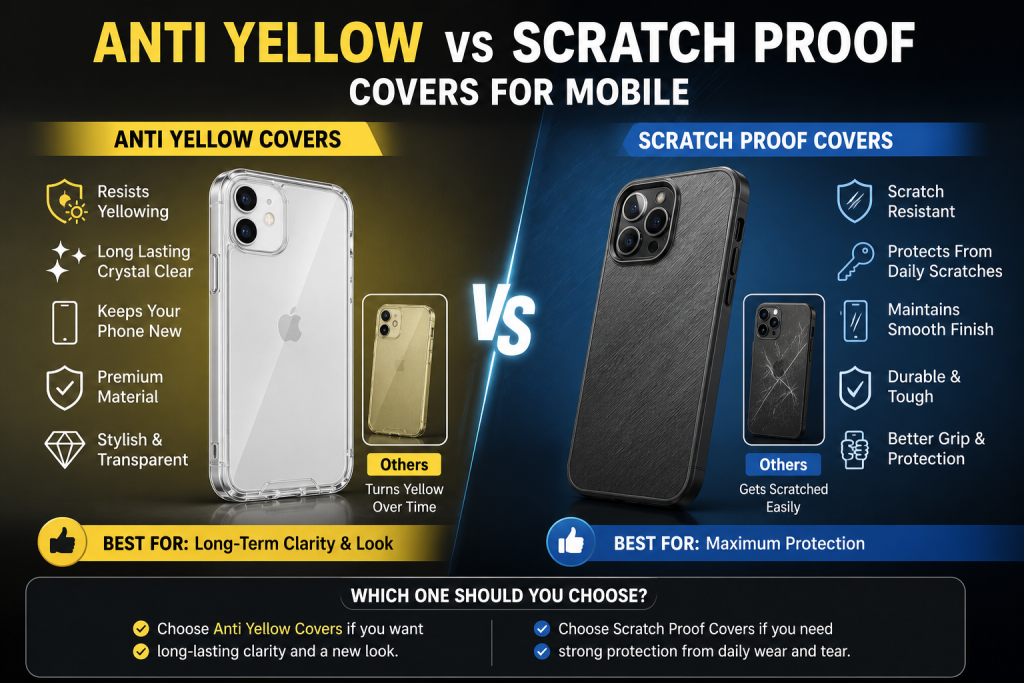
Your smartphone is an essential tool. Keeping it safe from daily damage is a priority for most owners. When you shop for a new case, two popular features often show up: anti-yellowing technology and scratch-proofing. These features sound great on paper, but they serve different purposes. Understanding the difference helps you pick the right case for your lifestyle and keeps your phone looking clean for longer.
Knowing how these protective traits work is key to keeping your phone in top shape. A yellow-tinted case can make even a brand-new phone look old and dirty. Meanwhile, a scratched-up cover can ruin the visibility of your screen and even lead to bigger problems later. We will look at the science behind these features and show you which one matches your daily habits.
The Science Behind Screen Yellowing
Clear phone cases are almost always made of a plastic material called Thermoplastic Polyurethane, or TPU. This plastic is popular because it is flexible, cheap, and absorbs shock well. However, TPU has a major flaw. It is sensitive to UV light, heat, and oils from your skin.
When these factors hit the plastic, they start a chemical breakdown of the material. This process is called photo-oxidation. Over time, the clear chains of the polymer break down and rearrange themselves. This rearrangement reflects light in a different way, which our eyes see as a yellow or brownish hue. Exposure to sunlight during your daily commute or frequent handling with oily fingers speeds up this process fast.
How Anti-Yellowing Technology Works
To fight this discoloration, manufacturers add specific stabilizers to the plastic formula. These are often called UV inhibitors. These additives work by absorbing or reflecting the damaging UV rays before they can break the chemical bonds in the TPU. Some high-end cases also include a special top coating. This thin, invisible layer acts as a shield against oils and sweat.
While no clear plastic can stay perfectly transparent forever, these technologies keep the case clear for much longer than standard ones. When shopping, look for terms like “long-lasting clarity” or “non-yellowing formula” in the product description. Reputable brands often have internal tests to show how their cases resist these issues over several months of use.
Choosing the Right Anti-Yellowing Case
Not all cases labeled as “clear” offer the same level of defense against yellowing. You must check the product details carefully. Some cheaper cases claim to be clear but have no actual UV-resistant additives. They will start to yellow within just a few weeks.
Look for brands that mention specific materials or coatings. A high-quality case will feel solid, not flimsy. If you cannot find details about how they stop yellowing, it is better to skip that option. Read user reviews from people who have used the case for at least three months to see if the clarity holds up.
Understanding the Risk of Screen Scratches
Your screen and case face threats all day. Keys, coins, and pens in your pocket are common culprits. If you put your phone in a bag, sand and other tiny particles can also cause damage. These small items create micro-abrasions on the surface of your screen protector or case.
While these tiny marks might seem small, they pile up. Over time, they create a cloudy or hazy look that makes it harder to see your display. In worse cases, sharp objects can create deep grooves. These deeper scratches can weaken the structure of the screen, making it more prone to cracking if the phone takes a fall. Keeping your screen clean is about both looks and function.
Materials That Resist Scratches
Different materials offer different levels of defense against these dangers. Hard materials, like tempered glass, are the gold standard for screen protectors. Tempered glass is very hard to scratch with everyday objects because it rates high on the material hardness scale.
For cases, hard polycarbonate is the primary material used for scratch resistance. It is much harder than the soft TPU used for flexible cases. While polycarbonate is great at stopping scratches, it does not absorb impact as well as softer materials. Many manufacturers now create hybrid cases. These combine a hard polycarbonate back to resist scratches with a softer TPU frame to absorb the shock of drops.
The Difference Between Surface Scratches and Deep Grooves
It is vital to know the difference between cosmetic damage and deep harm. A surface scratch is an abrasion on the top layer of your screen protector or case. These marks are annoying but do not hurt the phone underneath. They happen from normal contact with daily items.
A deep groove is more serious. This happens when an object pierces through the protective layer and damages the actual screen or the phone body. A good scratch-proof case is designed to be tough enough that common items will slide off the surface without digging in. If you see a deep gouge, it means the case did its job by taking the hit for the device.
When Anti-Yellowing is Your Priority
You should prioritize anti-yellowing if you care most about how your phone looks. If you bought a phone specifically for its color or design, a clear case is the obvious choice. Choosing a case with anti-yellowing tech ensures that your phone’s original look stays visible for a long time.
This is also important if you spend a lot of time outdoors. If you work outside or enjoy hiking, your phone is constantly exposed to direct sunlight. Without anti-yellowing protection, that case will turn yellow faster than you expect. Maintaining that clear, pristine aesthetic makes the extra cost for quality anti-yellowing materials worth the price.
When Scratch Resistance Takes the Lead
Scratch resistance is your top priority if your phone faces frequent abuse. If you are a construction worker, a parent, or someone who is constantly on the move, your phone is at high risk. You need a case that can stand up to sand, gravel, tools, and rough surfaces.
People who keep their phone in a pocket full of keys or toss it onto gym benches need a tough shield. In these scenarios, a slightly thicker, scratch-resistant case is a better investment than a thin, clear one. You might sacrifice the crystal-clear look, but you gain peace of mind knowing your device will not get marked up after just one day of work.
Can You Have Both? Integrated Protection Solutions
The good news is that you do not always have to choose one over the other. The best cases on the market today combine both technologies. These “hybrid” covers use a high-quality, UV-resistant clear back panel and a tougher frame.
This setup gives you the best of both worlds. The back stays clear, while the sides and edges provide the structural strength needed to resist scratches and absorb drops. Look for cases that market themselves as “dual-layer” or “hybrid” protection. These are often the most well-rounded options for the average user.
Enhancing Drop Protection
Screen and case protection is only part of the story. You also need to think about drops. A case that is anti-yellow or scratch-proof might still fail if it cannot handle an impact. This is where the design of the frame matters.
Good cases use raised bezels around the screen and camera. These raised edges ensure that if your phone lands face-down, the screen never touches the floor. The corners of the case should also be reinforced with extra material. These air-cushioned corners act like a bumper, absorbing the energy of a drop so your phone does not have to.
Material Longevity and Feel
The quality of materials determines how long your case lasts and how it feels in your hand. Cheap plastic can feel greasy or tacky after just a few days of use. Higher-quality polymers feel smooth and grip well in your hand.
A good case should feel substantial but not overly bulky. It should fit snugly without being impossible to take off. The better the materials, the longer the case will maintain its shape and protective qualities. Investing a little more in a reputable brand often means you will not have to replace your case every few months.
Assess Your Daily Habits
To make the right choice, think about how you use your phone. Answer these simple questions to guide your decision:
- Do you keep your phone in your pocket with keys or coins?
- Do you spend more than an hour outdoors in direct sunlight each day?
- Does your phone frequently touch rough surfaces like concrete or wood?
- Is the aesthetic of the phone’s back color important to you?
If you answered “yes” to the first and third questions, prioritize scratch resistance. If you answered “yes” to the second and fourth questions, focus on anti-yellowing.
Prioritize Based on Your Needs
Your final choice depends on where you want to compromise. If you prioritize screen clarity and spend most of your time outside, buy a high-end, anti-yellowing clear case. If your phone faces hard use, daily keys in your pocket, or rough work sites, choose a case that focuses on scratch resistance and toughness. Most people will find the best balance with a high-quality hybrid case that offers both moderate scratch resistance and strong UV protection.
Conclusion: A Clearer, Safer Screen Awaits
Protecting your phone is a balance between style and substance. Anti-yellowing tech keeps your device looking new, while scratch-proof materials guard against the rigors of daily life. By assessing your own daily habits, you can choose the right shield for your needs. A little extra care when choosing your case now will keep your device looking great and functioning properly for years. Choose the protection that fits your life, and enjoy using your phone with confidence.